Showing posts with label Steven Moffat. Show all posts

Monday, 8 May 2017

Knock, Knock.. Who’s There?

Season 10 has already set a high bar with its first three episodes, establishing a strong dynamic between new companion, Bill, and the soon to depart, Twelfth Doctor. So, with the fourth episode of the season upon us, does the trend continue, or does it fall flat on its face? Well..

Bill is on the move, searching for shared student accommodation. With her group of friends finding nothing within their price range, they are approached by an elderly gentleman outside of an estate agency. His presence, as we come to discover is no accident, and with him offering them a place to stay, the group enter into a contract with the mysterious Landlord, and move into his large, old house, which holds a dark secret.

The Doctor helps Bill move house, using the Tardis as a “removal van”, something which Bill suggests he could hire out. Questioning whether the Doctor sleeps in the Tardis, an old Fourth Doctor line is neatly resurrected, as he points out that “sleep is for tortoises”.  Rebutting the suggestion that he become a removal service. he comments upon his age, and that he is a Timelord, much to the amusement of Bill. Having mentioned regeneration, there is a swift diversion by the Doctor from the subject, and a contemplative look, suggesting some foreknowledge that his time in his present incarnation is almost over.

2eg7j0p80e51000

Before the opening credits roll, housemate Pavel disappears, and the mystery begins.

The large, draughty house fascinates the Doctor, and he soon makes himself at home; introduced by Bill to her roommates as her Grandad, or “Grandfather” harking back to the Hartnell era.

Housemate, Harry reveals his grandfather went hiking along the Great Wall of China, even attempting to steal a piece. In a deleted scene, we would have learned that his other grandparent was Harry Sullivan, after whom he is named.

Another of the students, Paul, attempts to make a pass at Bill, and again, her sexuality is brought to light, tactfully and respectfully, with the almost casual nature with which one would hope the LGBT community would be afforded by now. In fact, Paul is positively delighted to learn he never stood a chance!

With the house offering some suitably creepy creaking and groaning sounds, the group of friends speculate on whether it is the central heating, or, more wildly, a little doll that's come to life, or giant spider, both, perhaps, references to earlier stories.

Whilst the students are all well cast, Harry, in particularly, is an intensely likeable character, with a wide-eyed curiosity and a clear admiration of the Doctor. Perhaps it is the echoes of his grandfather upon whom the character is very loosely based, but I cannot help but feel Colin Ryan would make a magnificent addition to the Tardis crew.

2017-05-06 21.36.32After Bill and co discover the Doctor in a cupboard, we get a proper introduction to the Landlord, adeptly played by David Suchet, who exudes an unsettling, and often sinister calmness.

The Doctor is terrible with names, but reveals himself to be a fan of Little Mix, as, apparently, is Bill. The aspect of Bill’s life which the Doctor isn't a part of, is handled much more expertly than Clara’s casual blending of home life, teaching and occasional bouts of time travel when convenient.

It has a much more natural, refreshing quality,and with the Doctor effectively confined to Earth to guard the Vault, Bill having a life away from the Tardis is much more logical and credible.

Within no time, the wooden house begins to reveal its secrets, with roach-like creatures manipulating, and emerging from, the walls.

Bill and Shireen discover Pavel trapped within the wooden wall of the house, in a not too dissimilar pose from the unfortunate Cyberman in Earthshock, or Star Wars’ Han Solo, encased in Carbonite.

Meanwhile, the Doctor, Harry and Felicity find themselves trapped as the window shutters slam shut around them. Felicity manages to escape, however her fate is sealed outside the house. Pontificating on the origin of the creatures. The Doctor names them “Dryads”, a reference to Greek mythology surrounding tree dwelling nymphs.

vlcsnap-2017-05-06-21h39m21s981

Exterior scenes of the house bear strong resemblance to Gabriel Chase, from Ghostlight.

As they investigate further, Harry and the Doctor discover tenancy agreements dating back seventy years.  The Landlord explains his “daughter” Eliza, was dying, and must survive. Every twenty years, he takes in new “tenants”, which the house absorbs.

In the tower, Eliza is revealed to be made of wood, which is a rather disappointing explanation, although this is somewhat mitigated by Bill's astute observations, which lead to the revelation that Eliza is, in fact, not the Landlord’s daughter, but that he is her son. This is a nice twist, pointed with tragedy and poignancy.

The Doctor deduces that high pitched sound awakes the insects, which, in turn, revitalise Eliza., who, ultimately sacrifices her own life, and that of the Landlord, submitting themselves to the infestation. In a final act of mercy, Eliza restores Bill’s friends.

Whilst I have been critical of lack of death during Moffat’s tenure, it feels appropriate, with the house having not yet “digested” the students.

2017-05-06 20.56.32

No explanation is offered as to why the bugs turn Eliza into wood and eat everybody else or how their somewhat unusual diet sustains her. Similarly, how the Landlord learned that the house needed to be “fed” to keep Eliza alive remains a mystery. Perhaps, most significantly is that Eliza has  forget ton that the Landlord was her own son.

Nevertheless. the flashbacks, and subsequent scenes of the young, and older Landlord with his mother are beautifully realised, and David Suchet positively steals the final scenes. Whilst the “wooden mother” is somewhat unsatisfying, it is more than made up for by a positively stellar performance by Suchet.

landscape-1493726285-dw1

To conclude the story, the “something” in the vault is playing the piano, and Nardole’s scenes are brief, but measured. His character has a much more refined quality, particularly with shorter interactions with the Doctor, and there is much less “Little Britain” in Lucas’ portrayal.

The episode is recorded in both Dolby Digital 5.1 and, unusually, 3D binaural stereo. I am a fan of both, so an episode with a three dimensional soundtrack was a tantalising prospect. Surround sound is, of course, used on all recent episodes, however, the use of binaural recording is new. At time it does veer toward “gimmicky”, with some of the “knocking” feeling rather superfluous, but ultimately it is a highly effective presentation. That said, the Dolby 5.1 track is every bit as rich and encompassing. For the technically curious, you can read how binaural recordings works HERE.

Stand out performances by Colin Ryan and seasoned actor and Poirot star, David Suchet, complete the episode. It is a somewhat muddled plot, however succeeds due to the rich blend of characters and tragic denouement.

Episodes with “sentient wood”, with perhaps the exception of The End of the World (The Forest of Cheam), never seem to fare terribly well. From their inception in Mark of the Rani, to wooden Cybermen, and more recently, the interminably tiresome In The Forest of the Night, the concept has never been particularly well realised. This story does fare somewhat better, snf although the revelation is less than satisfying, it can be overlooked by powerful, evocative performances from a superb cast.

Whilst, perhaps, not quite as strong as Thin Ice, Knock Knock is an effective, emotive episode. It does feel somewhat rushed, and the revelations and resolution are a little lacking. Nevertheless, it scores a well deserved 8.5/10. A solid effort!

Monday, 24 April 2017

Smile.. Your Life Depends On It..!

It was with some trepidation that I approached this episode. Leaving aside the fact the Emoji Robots, shown in the trailer, inspired little confidence, the episode was written by Frank Cottrell-Boyce, who was responsible for the interminably tiresome In The Forest of the Night. Suffice to say my expectations could not have been much lower.

It was, therefore, a pleasant surprise to find myself immersed in an engaging, entertaining story…

The plot borrows heavily from Ark In Space, with underpinnings of The Happiness Patrol thrown in for good measure, however, it manages to remain original, paying homage rather than simply emulating either story.

2017-04-22 20.31.34

Embarking on her first “proper” trip in the Tardis, Bill’s sense of wonder and curiosity are evident from the start. She chooses the destination (the future), and she and the Doctor land on an Earth colony, which seems to have a curious absence of human beings.

The plot itself is fairly basic; the colony is constructed from minuscule robots, and ‘staffed’ by the Emjoibots, with Emojis serving as a part of human language and culture to survive into the distant future.

The concept of ‘nanobots’ attempting to ensure happiness, as a final state of mind prior to death is a solid enough concept, not dissimilar to the Chula Nanogenes from The Empty Child. They take lives inadvertently, in the learned belief that they are enhancing the human beings, and with no concept of death.

2017-04-22 20.30.54

Much of the first 25 minutes of the episode is spent exploring the surroundings, and is fairly light on plot, however, what it lacks in storyline, it more that makes up for in character development.

Bill is shown to be a compassionate, emotional companion, who is clearly affected by the fate of her home planet, and of the colonists. She is bold, inquisitive, and the chemistry between her and the Twelfth Doctor is becoming more and more evident as the series progresses.

The set design is particularly impressive, and there are some nice cultural references; most notably a subtle David Bowie allusion, in which the Doctor states (to an Emojibot), “I’m happy.. hope you're happy too”. It is all the more pleasing as both Capaldi and writer, Cottrell-Boyce are both fans of Bowie, the latter having written a biopic of The Thin White Duke for Danny Boyle, although the film was ultimately shelved at the behest of Bowie himself.

Unfortunately, the story is let down by a weak “deus ex machina” ending, in which the resolution is a quick wave of the oft overused sonic screwdriver. The concept of “rebooting” the robots isn't inherently bad, however, it would have made a refreshing change to see the Doctor use his ingenuity to resolve this, rather than resorting to the increasingly tiresome use of the screwdriver.

2017-04-22 22.39.24

Nevertheless, weak plot and lazy dénouement aside, Smile is a surprisingly good effort. It’s witty, engaging, funny and emotive, in all the right places. The relationship between Bill and the Doctor is developing nicely, and Pearl Mackie is making a strong, decisive departure from her predecessor, establishing herself as an ordinary, but inquisitive and compassionate human being. She is a much needed breath of fresh air to the show.

2017-04-22 22.49.17

It is also worth noting that Capaldi seems to have softened considerably, although still retains a delightful abrasiveness when needed, not dissimilar to the First Doctor’s persona. He clearly has a better understanding of humans, having spent 70+ years squirreled away in a University, and yet he manages to retain his alien qualities perfectly. The scene in which his two hearts are explained is both logical and entertaining.

Whilst Smile is never likely to achieve cult status, due in no small part to the thin plot and cutesy robots, it is a worthy effort, and a throughly engaging episode. Given much of the story is spent exploring the colony, it could have easily been an exercise in boredom, however, the episode succeeds due to the strong character development, subtle humour and reflections of episodes past.

It is far from perfect, however is certainly worthy of the 7.5/10 I am awarding it. A pleasing story, with solid performances from all, and a cliff-hanger that is both intriguing and suitably bizarre. Well worth a watch!

Sunday, 16 April 2017

Guess Who’s Back!

After an absence which seems to have lasted an eternity, Doctor Who is back! And so, dear reader, are my reviews. Regular readers may have noticed that the Christmas episode, “The Return of Mysteriously Tiresome” did not get a review. Frankly, I couldn't be bothered. It was turgid rubbish, not worth of wasting time on! So, with that out of the way, let’s get down to business.

2017-04-16 10.58.34

With Clara now departed for good (we hope!), a new season brings a new companion, in the form of Bill Potts, as portrayed by relative newcomer Pearl Mackie, who wastes little time in establishing her character.

In scenes strongly reminiscent of Shada, the sadly broadcast Tom Baker story, Bill is attending the lectures of a mysterious lecturer at Bristol University. He has occupied a room for many years, replete with Police Box in the corner, lecturing on any subject he so desires. He is, of course, the titular Timelord. He is The Doctor!

Taking a shine to Bill, the Doctor takes her under his wing, offering her private tuition, however it isn’t long until the duo are up to their necks in trouble.

Pearl-Mackie-Bill-Potts-Doctor-Who-136417299183202601

From the outset, Bill is firmly established as a lesbian; the first openly gay companion to travel with the Doctor in his on screen adventures. There have, of course, been gay companions, both in print and in Big Finish audios, and established regular gay characters on screen. However as a travelling companion, this is a first for Doctor Who. And the subject is handled remarkably well. Whilst making it abundantly clear that Bill is gay, it isn't forced, nor is it crass. Moffat has a poor track record of writing LGBT content into his stories (Susan the transgendered horse, anyone?), so Bill’s sexuality is handled with refreshing honesty and realism.

2017-04-16 12.46.48

Whilst the first 25 minutes of the story essentially sets up Bill as the new companion, it is a slow and, at times, rather boring start to the season. Beyond her sexuality and curiosity, we learn surprisingly little about Miss Potts, and even less about the plot of the story. Nevertheless, it seems to work, as Mackie captivates the audience with her debut performance. Her interaction with the Doctor is natural, and their own screen chemistry is evident. Capaldi is, as always, on fine form, and presents a softer, more seasoned Doctor, seemingly more empathetic, less abrasive, and more at ease with human beings. Perhaps the seventy years he has spent lecturing at the University have served him well.

It is a shame that we are starting to see such character development in the Twelfth Doctor now, in his final season. It feels as though his character has much more to offer, and certainly, this viewer will miss Capaldi enormously. He has been an extraordinary Doctor, and beyond the screen, a magnificent ambassador for the show.

Meet-Bill-2-e1461436152389-2000x1005

Back to the episode. The story centres around a mysterious puddle, which, it transpires has a degree of sentience, and seeks a pilot, which it finds in the delightfully named Heather (Heather, of course being the name of Bill Hartnell’s wife). There is clearly more than a frisson of romance between Bill and Heather, however, again, it is handled carefully and respectfully, without resorting to tokenism or crass innuendo. Unfortunately, the plot is the major let down of the episode. Whilst introducing a new companion is important, doing so at the expense of a storyline is never a good idea. The concept of sentient water (or spaceship “oil”) is a reasonable idea, unlike sentient “eye snot”.

Bill’s reaction to the Tardis is beautifully achieved, with the usual blend of comedic reaction and disbelief, however, flitting around the place, and ultimately, the universe, to escape a puddle is a wasted opportunity. It takes what could have been a reasonable episode, and turns it into self indulgent fanwank. Throwing the Tardis into the Dalek-Movellan war is utterly pointless, and wastes the opportunity to explore that period in history.

pearlmackie

There are numerous nods to the past, most, thankfully, much more subtle, such as the photos of Susan and River on the Doctor’s desk, the older sonic screwdrivers, and the explanation for the dimensions of the Tardis, which could have been neatly lifted from Robots of Death. And, just in case you thought you were finally rid of Clara, there’s a nod to her, as the Doctor contemplating removing Bill’s memories of their adventure.

135058.c794a0ee-100d-47c5-ac93-db2e97c40482

Ultimately, the episode thrives on said fanwank, however, due to stellar performances by Capaldi and Mackie, it manages to remain entertaining and largely enjoyable. It isn’t the strongest season opener, by any standard, neither is it the strongest debut for a new companion, yet it works well enough to leave one wanting to see more of the new pairing. The episode also sets out a season arc, with a mysterious panel, seemingly leading to a door, concealed in the basement of the university. The Doctor is keen to protect it, and to ensure that the newly discovered puddle is focussed on them, rather than gaining access to what lurks inside. It’s a pleasingly subtle introduction to the season arc, and unlike the “Impossible Girl” backstory, invites mystery and intrigue rather than tedium and fatigue.

As far as we know, thus far, Bill is an ordinary earth girl, with no remarkable backstory. She is credible, feisty (God, I hate that word, but in her case, it is apt). She is clearly intelligent, curious, compassionate, and above all, believable. Having endured an increasingly tedious relationship with Miss Oswald, I am looking forward to spending time with Bill, and despite the somewhat tepid plot, I believe this has the potential to be a very good season.

Overall, ranking the episode is difficult. Were it not for Mackie and Capaldi’s performances, it would probably garner 3/10. However, their presence elevates it to a sold 7.5/10. It’s an entertaining, if unfulfilling watch.

Oh. And it has Nardole in it. Hmmm…. I’ll close the review by allowing his expression to surmise my thoughts on that!

The Husbands of River Song

Saturday, 26 December 2015

River Gets Head…

A snow covered Tardis stands in the streets on the human colony of Mendorax Dellora. It is Christmas Day, 5345. Carol singers, and episodes, will be criticized, and in this instance, quite heavily!

Picture shows: Peter Capaldi as the Doctor

Cards on the table, as always. I am most definitely not a fan of River Song. I liked her immensely in her first appearance, but, for me at least, it all seemed to go downhill with every passing story, as her timeline grew ever more complex and convoluted. Add into the fray her “spoilers” and “sweeties” and I could happily see her being deposited into the nearest black hole.

Anyway, with my disdain for Professor Song out of the way, let’s get down to brass tacks (whatever the hell they are) and take a look at this year’s Christmas offering.

Nardole, played by Matt Lucas, knocks on the door of the Tardis, whereupon answering, the Doctor appears, sporting a fetching pair of comedy antlers, provided by the Tardis holographic circuits. He is looking for “the surgeon”. Assuming, incorrectly, yet serendipitously, that Nardole means “Doctor”, the titular Time Lord accompanies him to a flying saucer, where he is met by a familiar face. Hooray! It’s my favourite character!

WARNING: Embargoed for publication until 00:00:01 on 05/12/2015 - Programme Name: Doctor Who - TX: 25/12/2015 - Episode: n/a (No. n/a) - Picture Shows: ***EMBARGOED UNTIL 00:01hrs 5th DEC 2015*** River Song (ALEX KINGSTON) - (C) BBC   - Photographer: Simon Ridgway

Failing to recognise him in his most recent regeneration, River takes the Doctor inside the saucer, where she introduces him to her husband, King Hyrdroflax, a colossal red cyborg, with a suspiciously human head, played by Greg Davies, who is need of surgery. It soon transpires that River is far more interested in the projectile, the “Halassi Androvar” diamond, which is lodged in the brain of Hydroflax, than in saving his life.

Unfortunately for the Doctor and River, Hydroflax has been listening, and after some faffing around, he removes his own head, for no apparent reason, other than to show off. Naturally, River steals the head, and much hilarity ensues. (Caveat. Perception of hilarity levels may vary!)

Screen Shot 2015-12-05 at 21.18.47

Attempting to “steal” the Doctor’s Tardis, River warns the “surgeon” that the machine is somewhat more spacious inside, affording the Doctor the opportunity to finally utter the immortal line “it’s bigger on the inside”, although he does get rather carried away and launches into a lengthy spiel about temporal physics. The Tardis refuses to dematerialize, as a sizeable amount of one of the occupants is still on the outside (which makes one wonder how “Handles” the Cyberman managed). Bringing a “message” to the Doctor, Ramone (another of River’s husbands) allows the body of Hydroflax aboard the Tardis, and the ship takes off.

Arriving aboard the “Harmony and Redemption” liner, River plans to sell the diamond, which is still firmly ensconced in the King’s head, to “Scratch”, a representative of 'The Shoal of the Winter Harmony', and a man who clearly has cranial issues of his own, as he appear to keep his money inside his own bonce. The scene with him removing the sphere from his head is effective, although perhaps not necessarily suitable for the timeslot.

capaldi-river-Hydroflax-christmas

After some more buggering around, in which Hydroflax’s head, much like my interest in the story, is rapidly disintegrated, the diamond falls out, shoots into the air, where River catches it neatly. With her breasts. I know River is sexy and sassy, and all of that jazz, but really? The genital jokes in The Girl Who Died were bad enough.. now we have to contend with River’s knockers being flailed around like a rudimentary lacrosse racquet!

Departing in the Tardis, and with River knocked unconscious, the Doctor takes the diamond, does a little jumping around in time, where he gives the jewel to a man on the planet Darillium, advising him to build a restaurant with a view of the singing towers.

The final scene sees the Doctor and River sharing a tender moment at the restaurant, where he had promised, on numerous occasions, to take her for dinner. She ponders on the rumours that their date at the Singing Stone towers would be their final encounter; their last night together. It transpires that a night on Darillium last for 24 years, and giving River a sonic screwdriver as Christmas present, River explains to The Doctor that “happy ever after” doesn’t mean “forever”, it means “time.. little time”. And the credits roll mawkishly, with them literally living “happily ever after”.

husbands_of_river_song_3

I hadn’t expected to like this episode, largely due to River Song. Ironically, I found the scenes between her and The Doctor to be the most, nay, only enjoyable parts of the episode. The chemistry between Kingston and Capaldi is superb, perhaps due to their shared mature years. As a story, however, the episode is an utter bloody shambles. It’s a frenetic, bombastic waste of an hour, held together by a few comedic scenes which work, and a conclusion which could have been reached within ten minutes, save for all the farting around with a pointless alien who posed no credible threat whatsoever.

Matt Lucas appeared to be channelling the ghosts of every “Little Britain” character he has ever played, and Greg Davies is so ludicrously over the top, he makes King Yrcanos (Trial of a Time Lord) seem like a mewling kitten. His performance lurches between parody and pantomime, and gets tiresome very quickly.

The episode is salvaged (just!) by sterling performances from Capaldi and Kingston, and it is the latter who surprised me the most. I found her much less annoying than I have in the past. The scenes in which the Doctor attempts to prompt her into recognising him are suitably entertaining, and the final scenes are surprisingly effective, and quite moving.

In essence, The Husbands of River Song has ten minutes of workable material at the start, and concludes with a further five minutes of sheer brilliance. Sadly, the meat in the sandwich is all style (and not much of that) and absolutely no substance. I enjoy a good “romp” as much as anyone, but this is less of a romp and more of a farce, and not, unfortunately, in a good way.

Clearly intended as an end to River Song’s story, I would have liked something with a little more substance for her to bow out on, particularly in the light of the fact she was, arguably, one of the strongest elements of the episode. 

river-song-alex-kingston-4

Much like Time of the Doctor and Hell Bent, Steven Moffat doesn’t seem capable of writing satisfying endings for characters. Hell Bent, while serviceable, was decidedly average, and Matt Smith certainly deserved a far better conclusion than the risible nonsense offered up in Time of the Doctor. The same is true of this episode as it bids farewell to River Song. Whilst in each of these episodes, the departing character has excelled, the plots have been substandard.

In all honesty, calling The Husbands of River Song “substandard” is to give it more credit than it deserves. It is (and this is, of course only my opinion), utter crap. Pure unadulterated rubbish. On second viewing, it is marginally better than the god-awful “Doctor, Witch and Wardrobe”, but is still a cartoonish, bloated episode, devoid of plot, menace or interest.

In summary, 5 minutes of brilliance, 10 of reasonable quality, and 45 of extraneous drivel that I have absolutely no interest in watching again. It earns 4.5/10 from me, and that is being generous!

Wednesday, 16 December 2015

Series Nine Guest round Up - Part Three

Welcome to Part 3 of the guest submissions, in which we take a retrospective look back at Series 9. Today's guest posts come from Neil Dymond-Green and J.M aka "Life in the Gaps". We begin with Neil's submission. As with the previous posts, which can be found here (part one, part two), they are presented unedited, and need no comment from me. Enjoy!
 
Thoughts on Doctor Who Series 9

Rather than go episode by episode through the series, I wanted to examine three areas which bugged me about series 9 of Doctor Who.

Cliffhangers

I was really pleased to hear that Moffat planned to bring back two (or more) parters for series 9. It's been quite a while since a series had more than a smattering of cliffhangers and they are historically quite an element of Doctor Who.

But what is Moffat playing at with them? When I was a child watching Doctor Who, cliffhangers were exciting points to keep you guessing for a week (or less during season 19 when the show was broadcast on Mondays and Tuesdays). But... and for me this is a big but, the excitement was also in wondering how the Doctor or his companion would resolve the cliffhanger and seeing that straight away at the start of the next episode.

And this is not something we got to see during series 9. Instead, the start of the next episode would veer off in a completely different direction. Let's examine them individually:

The Magician's Apprentice's cliffhanger is that Missy and Clara are apparently exterminated. But at the start of The Witch's Familiar there are alive and outside the Dalek city. We then get a vague story about the Doctor before Missy hand-waves away the fact that she used the energy from the Dalek's weapons to activate the transporter.

Under the Lake ends with the Doctor having travelled back in time and apparently reappearing as a ghost. Leaving aside the problem I have with any cliffhanger that says the lead character of the show is dead, we then find ourselves in the TARDIS at the start of Before the Flood with the Doctor addressing the audience (and I hate the fourth wall being broken) about how the story will be resolved with the Bootstrap Paradox. The cliffhanger is again only really addressed later on in a hand wavey 'oh well, it was a hologram all along, see' way.

The Zygon Invasion ends with the Zygon version of Clara shooting down the Doctor's plane. Then, at the start of The Zygon Inversion, we find ourselves in a simulation of Clara's flat. We do find out that Clara is able to (conveniently) influence her counterpart's actions and give the Doctor enough time to escape.

I have no problem with the pseudo cliffhanger of Face the Raven as the next story is effectively the resolution to it. But then we get to the end of Heaven Sent. We're all on Gallifrey, which has been lost for some time, all hell is promised to break loose and it's exciting. You may be able to imagine me actually shouting at the screen when Hell Bent started with the Doctor meeting Clara in a diner.

Over-use and under-use
It must have seemed like a great idea to bring back Kate Stewart for the Zygon two-parter. She effectively fills the role that the Brigadier did for the Third Doctor onwards - a valuable friend and ally, albeit one whose methods the Doctor didn't always completely agree with. But then she is sent off on a pretty pointless mission (on her own? she's in charge of UNIT!) and disappears for a big chunk of the story.

Likewise, Gallifrey. The Doctor's home planet has effectively been missing since the start of the new series and especially since it was somehow locked away at the end of The Day of the Doctor. It's a huge deal that we are finally back there. Except the episode barely manages half an hour there, because of Moffat's obsession with keeping his beloved Clara alive (sort of).

Meanwhile, we get the overuse of veiled comments by the Doctor throughout the series about Clara heading towards death (and how much better would it have been if the fan theories had been true about her already being dead and him snatching some last adventures?). We get repeated allusions to the Hybrid - with the eventual vague, hand-wavey non-answer I've come to expect from Moffat. But then, it felt like Clara had outstayed her welcome in the show by this series anyway.

I'd also argue we had too much of Ashildir/Me during series 9. I didn't feel that she worked as a character - I'm not sure whether this was down to the actor, the writing or a combination thereof. There was little shade to her character. Storywise, it felt unlikely that the Doctor would be rash enough to 'create' her without thinking it through more. Her role in Face the Raven felt very woolly. To be honest, the TIme Lords could have used any agent to get to the Doctor.

And, after the Doctor's words about it not being a good idea for him to travel with an immortal, it felt horrible watching Ashildir and Time Zombie Clara zoom off in the Diner-TARDIS.

It must have seemed like a good idea at the time...
It's long been acknowledged that Moffat seems to have a tendency to come up with 'wow ideas' and throw them into the mix without necessarily worrying about whether they make sense in the context of the story. Here are just some of these ideas I spotted during this series.

In The Witch's Familiar there is a scene which, on one level, is incredibly touching. While discussing the return of Gallifrey, Davros opens his eyes. For once, he is seeing the world naturally. It's beautiful, it's touching - and it's also total BS. So Davros has been able to see for all these years? Why would he sit there with his eyes screwed shut, especially at those moments when Daleks have shot him?

In the same episode, there is a 'humorous' scene of the Doctor zooming around in Davros' chair. To be honest, I can imagine children have been dreaming of that combination since Davros first appearance forty years ago. But to put it in the show? To do so, you have to write the Doctor out of character as someone who would rip a dying man from his life support/wheelchair just to make a joke about a cup of tea with the Daleks?!

We have another dreadfully out-of-character moment in Hell Bent. Again, I can see where the appeal of the idea came from. 'Wow! Let's prove once and for all that Time Lords can change gender when they regenerate! We'll show it on screen because people don't seem quite convinced by the Master/Missy thing. Oh, and while we're at it, we'll show that Time Lords can change skin colour too! Hoorah!' On one level, I applaud this - I have no problem with the idea that regeneration can change a person in all sorts of ways (of course, it had sort of already been shown when Romana regenerated at the beginning of Destiny of the Daleks).

But to do so, Moffat had to write the Doctor horrendously out of character again. The Doctor, a man who abhors guns (and will only usually use them in the most desperate of situations), shoots the General! He doesn't need to. He could pretty much just walk past (he is President, after all). Yes, he asks how many regenerations the General has, but it's been established that regenerating is a fairly traumatic occurrence (and is, for the most part a limited thing). Yet again, a 'wow' idea that really doesn't belong.

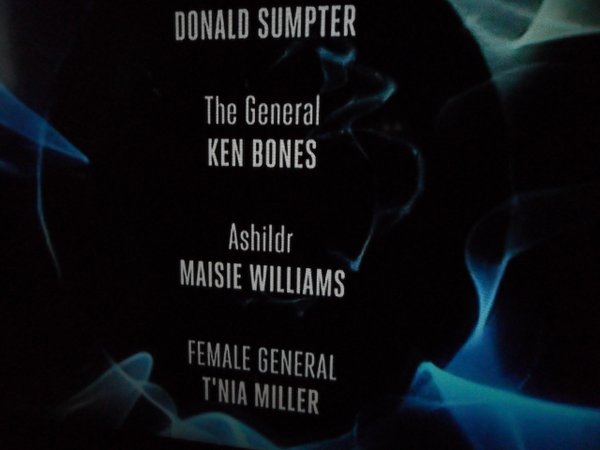
As an aside here, there was a horrible mess with the credits (you can see here, but it was also done this way on screen) for the General, with Ken Bones credited as The General but T'Nia Miller credited as the Female General.

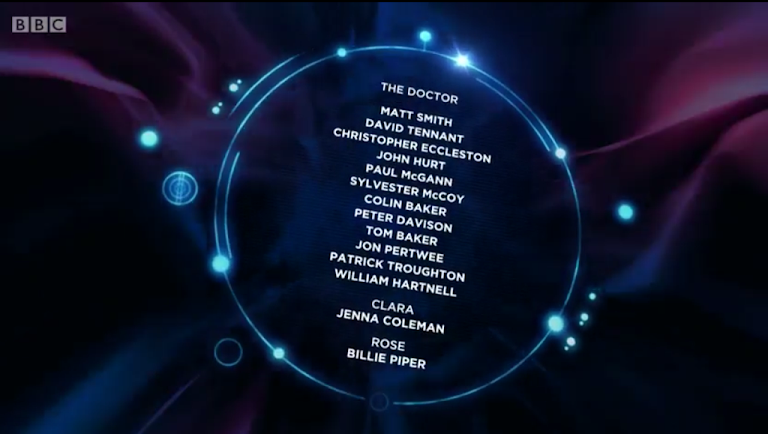
Why not credit them both as The General? It's not like multiple actors haven't been credited for the Doctor..


Neil Dymond-Green

Follow Neil on Twitter @neilrdg. He also blogs on a somewhat erratic basis (his words!) at http://neilrdg.wordpress.com


Our second submission comes from J.M, aka "Life Between the Gaps"

UnDoing Series 9

I'm fairly new to the blogging scene - especially when it comes to blogging about specific fandoms.

I've been a fan of Doctor Who since the late 70s/early 80s. And for an American to say that, is quite a feat. Us Americans who grew up with Who are few and far between. (So much, that when I was little, I thought this show aired just for me!) I share that only because it provides a framework for my thoughts and opinions.

One of the unfortunate aspects of Series 9 is that on first watch, I tended to dislike most of the episodes. ("Under the Lake", "Zygon Inversion", and "Heaven Sent" were the exceptions.) I'm not sure if that's due to all the negativity I come across on Social Media, or if it's because of something simply 'wrong' with the production and it takes me until the second or third watch to get past whatever 'wrong' that I noticed on first watch.

To be entirely fair, I had written off Doctor Who with "Death in Heaven" (The Brig as a Cyberman??? Really Moffat? WTH were you thinking?)... But then I found myself in London at Christmas last year and there was no way in hell I wasn't going to watch Doctor Who while I was there! So, I watched "Last Christmas". But it wasn't enough to pull me back into the fandom properly. (Not that I was ever really in the fandom. I'm a fan, but I don't go to cons or buy merchandise or anything like that. Remember, I was the only person in my universe who knew about Doctor Who when I was growing up.)

But this summer, I came across the soundtrack for Series 8, which prompted a proper rewatch - unimpeded by the negativity of social media. I watched it for the soundtrack and found myself watching Peter Capaldi. The man is mesmerising to watch as the Doctor. And between those two elements, I found myself enjoying Doctor Who again.

This doesn't mean there aren't major problems that I find with pretty much each episode. There are. I majored in Theatre, I've been trained to analyse sets, costumes, lighting, acting choices, story line, character arcs, etc. to death. There's always something to complain about. There's also always something to praise.... Which makes this review difficult. Because everything that I wanted to praise Series 9 for from a story-telling point of view was undone by one single episode.

All of that provides framework for the rest of this post. Because those are the circumstances that colour my thoughts and opinions about Series 9. I'm going to be focusing primarily on "Hell Bent," since the intent for that episode was to tie at least the previous three episodes together and the entire Series was hinged upon it.

So, here's the brief Series 9 shake-down (or how all the episodes tie together):

Magician's Apprentice/Witch's Familiar: Confession Dial, "Doctor assumes he's going to win",

Under the Lake/Before the Flood: Doctor warns Clara about being too doctory and tells her he has duty of care.

Girl Who Died: Doctor has duty of care and Clara asks him how he's going to win. "Tidal Waves." "I can do anything"

Woman Who Lived: They could have just skipped this whole adventure, because the applicable bits were at the end when in the pub and consisted of "tidal waves" and "Doctor's leftovers".

Zygon Invasion/Inversion: as much as I WANT these to have a purpose in this season, they really don't. (Well, the Doctor's 'Model of War' speech, but I'll get to that later.)

Sleep No More: Can I pretend I never saw it? However it does serve a purpose because of the images presented without cameras around, made the Doctor search for how the images were projected in the Dial.

Face the Raven: "Doctor's Leftovers are on Trap Street", Clara's attempt to be doctory backfires. Confession Dial

Heaven Sent: Confession Dial, confirmation that being like the Doctor is what killed Clara, How does the Doctor win?

Hell Bent: Confession Dial, "I can do anything"

If I had the chance to go back in time, I would tell myself: "Whatever you do, don't watch 'Hell Bent'. That one episode undoes everything that you love about Series 9." Every single thing. Yes, I wrote up a piece about all the clues that people missed and how that changes the interpretation, but while that fixed everything associated with the "Diner Scenes", it doesn't fix everything.

The biggest issue that remains is the Doctor murdering an unarmed person in cold blood. There was nothing right about that and no excuse you can tell me will ever make that right. Ever. At all. If Stephen Moffat should be sent packing from Doctor Who, it is for that one bit of writing (also the use of b***h and a*s* rank up there as poor choices in a pre-watershed show). I can hear people now, 'But Tenth Doctor pointed a gun at Rassilon and Master.' True, with one profound difference: He didn't kill either of them! That one action erased all that was beautiful and glorious about the Doctor's "Model of War Speech" from "Zygon Inversion". In fact, that "War Speech" makes me a little sick to my stomach when I watch it now. Because it feels hypocritical. "Oh, but the Doctor went through four point five billions years in the Confession Dial, he would come out unstable." Unstable, yes. Killing so pointlessly? No. He had control of the room, all he had to do was move Clara to the lift. No one had to die. I really don't know what Moffat was thinking with that one, and given his writing style, I don't think he knows either other than "Drama".

That said, is it impossible for the Doctor to kill people? No. But then, his instability should have been pressed further. Made clearer. We needed to see more instability earlier in the episode and it just wasn't there. If you want to break the Doctor, fine. I can get behind that. I've Roleplayed and written enough fanfics with broken!Doctor to understand the appeal. But don't do a half-way job that just ends up with things coming off as out of character. The Doctor can break, but he tends to break in very specific ways (Consider Nine in "Dalek", Ten in "Waters of Mars", or Five after "Planet of Fire").

I was going to do a bit of analysis of 'actor choice' verses 'director vision' verses 'writer intent'. But then, I came across scripts for "Heaven Sent" and "Hell Bent" posted on the BBC Website. I decided it was pointless to do any proper analysis because Moffat is a micromanager script writer. He not only gives detailed camera angles, but he dictates specific facial expressions to be given at specific points. Basically, Moffat's scripts (at least those two) don't leave a lot of room for debate or creativity. That said, I'm left asking "What was the Doctor's Motivation for killing the General?" The only explanation we're given is when the Doctor says to Clara "It was him or you." No. There were a dozen options besides killing the General. So, I'm left with no choice but to chalk that up to bad writing. Moffat has detailed so many other things and all we get here is "Horror: the Doctor shoots him." Sorry, that's not good enough. I need to know the Doctor's mental processes that led to the decision to kill instead of running.

Bringing Clara back from the dead indefinitely was another major problem. For once I'm going to agree with Ashildr: Clara's death was beautiful. Even if I didn't care for the plot of "Face the Raven", even if I felt some aspects dragged on too long, the set-up for Clara's death and her speech to the Doctor just prior to her facing the raven was extraordinary.

I admit, I've never been a fan of Clara. I didn't hate her, I was just underwhelmed. Then, especially post-Danny Pink, she finally started to have depth and scope and was more than just an "I'm a special snowflake, so like me" character. I started to sort of care what happened to her. The fact that she had this exquisite death that was on par with Adric's death in 1982, well, nearly had me in tears. For a character I don't care for? That's a pretty admirable accomplishment.

But with "Hell Bent" she's back and who knows for how long. She had this glorious death and it meant nothing. That's not an 'interesting plot twist.' It completely undid everything that came before. Even all of Clara's echoes saving the Doctor. Maybe they weren't echoes. Maybe they were all her post-death. (See how easy it is to completely change all of Series 7 and 8 as well?) This is not clever, this was just poor story-telling.

The Doctor in both "Heaven Sent" and "Hell Bent" is presented to be traumatised by Clara's death. It's as if he's never been through anything like that before. Okay, so back in "Girl Who Died", he said:

"I'll lose any war you like. I'm sick of losing people. Look at you, with your eyes, and your never giving up, and your anger, and your kindness. One day, the memory of that will hurt so much that I won't be able to breathe, and I'll do what I always do. I'll get in my box and I'll run and I'll run, in case all the pain ever catches up."

Yes he did say that. And why do you think he knows that's how he'll react? It's because he's been through it before. It's like he says at the end of that episode, "Immortality isn't living forever. That's not what it feels like. Immortality is everybody else dying."

He knows that because he's lived it before. Going all the way back to the first companion death: Katarina and as recently as the Pond-Williams. So what the heck made Clara's death so special that her death in particular would be what drove him to break the rules (again)? I need that explained. And that is a reflection of poor writing as well. From someone who writes as many details into the script as Moffat does, I expect more. (Maybe if he spent less time trying to dictate actor/director choices and more time telling the story, things would be different.)

It's as if with each series, Moffat ignores everything that happened before. And there's a big problem with that. This Doctor is the same Doctor as he was when he looked like William Hartnell. Are you seriously trying to tell me that when the Doctor went through all this hubris when he looked like David Tennant on Mars that he would just forget it all? Heck, he had made a Tidal wave in Ashildr and questioned himself about it and that wouldn't stop him? Basically from a Character Development standpoint "Hell Bent" doesn't make an ounce of sense, either within Series 9 contained or within all of Who history as a whole.

Worse than everything else though, "Hell Bent" undoes everything I loved about Series 9 and everything I started to like about Clara as a character. Even the episodes where I liked Clara "Under the Lake", "Girl Who Died", and "Face the Raven", I can't like now, knowing that all that amazing character growth was undone in "Hell Bent".

About the only part that was 'right' without needing any amount of mental gymnastics to fix was how the TARDIS 'booted up'/welcomed the Doctor upon his return. So watch the first 18 or so minutes and the last three minutes and then the Series holds up. If you watch the rest, then "Hell Bent" goes down the drain and takes the rest of the series with it.
 
You can follow J.M on Twitter at @lifeinthegaps and read her blog, which you can find at http://life-in-the-gaps.blogspot.com/

My thanks to Neil and J.M for taking the time and effort to write for me.. It is very much appreciated!

Monday, 14 December 2015

Series Nine Guest Round-up - Part One

Having written my own summation of Series 9, I thought it might be fun to open up the blog to some of your thoughts. They are posted in no particular order, and shorter submission are merged into one post, purely for aesthetic reasons. They are completely unedited, and need no comment from me! So, our first submission comes from fellow blogger Shawn Lunn...

Promotion & Ratings

Two of the hardest things to ignore about the recently aired ninth series of Doctor Who (or Series 35) has been the way in which the show has been promoted and the ratings it's generated. In both cases, some concern has arisen.

The promotion on this show has taken something of a strange hit in the Moffat era with some information being revealed in a frustratingly cryptic manner and in other cases, too much information at once. The Comic-Con trailer used to promote the ninth series drew criticism for the unwise soundbyte of 'same old, same old' in relation to the continuous dynamic with the 12th Doctor and Clara Oswald but remember the days when this show used to give us beautiful concept trailers? We had glorious ones like the Ninth Doctor running from a fireball as Rose Tyler contemplated jacking in her ordinary life for adventures in time and space as well as the beautiful split screen effective for the Tenth Doctor and Martha Jones. And don't get me started on that campfire trailer we got for the fourth series with Donna Noble. That was truly epic in every sense of the word.

In Moffat's era, the only trailers to match that level of anticipation was the Series 5 one with the Eleventh Doctor and Amy Pond floating inside the Time Vortex as well as the 50th anniversary one showing us the great legacy of the show. Unfortunately these days, the trailers feel too brief and a little cobbled together and even something like Doctor Who Extra (the Capaldi era version of Confidential) is needlessly broken into bytes rather than one solid chunk altogether.

You have to wonder what's going on with the BBC and the promotion team at the moment. It's weird when you see them doing everything in their power to downplay Davros's return at the start of the series but going into overdrive to remind everyone that Gallifrey was returning, even if it ended up being barely used in the recent finale. I am hoping that the BBC have paid attention to these noticeable blunders and make a better effort into promoting Series 10 when it should happen to air.

Then there's the ratings. Okay, let's be honest. Once everything is totalled up, the show is still attracting between 5-6 million viewers and considering it's growth Stateside, it's in no real danger of actual cancellation but between the erratic promotion and inconsistent timeslots (8pm is too late for children - I'm not a parent and even I get that), the ratings have been down enough for it to be an actual concern. Personally, I think it's time for the BBC to move the show back to Spring and air it around the 6pm-7pm mark as it mainly did during the RTD years and during the early start of Moffat's era too. With the tenth series alluding to something of a reboot (and possibly Steven Moffat's last one), maybe things will take a turn for the better with the show in relation to promotion and overall ratings.

Shaun runs an excellent blog, which you can check out HERE. You can also follow him on Twitter at @shawnlunn2002
 

The second submission comes from Will Egan..

It’s that time of year again. Our time travelling hero has finished another run of adventures (*sobs*), which can only mean one thing…a series appraisal! Before this series I must admit to have been rather pessimistic on how series 9 would pan out quality wise. I needn’t have worried-it was great and an improvement over series 8 which I also enjoyed massively.

I’m sure many others on here will be waxing lyrical over Peter Capaldi whom is fast shaping up to be one of the finest Doctors to have ever graced the screen. All I’m going to say is that Capaldi was simply magnificent this series, with his anti-war speech in The Zygon Inversion being worthy of a BAFTA alone. We really are lucky o have such a fine actor (and person!) to play our favourite Time Lord. The dynamic between Capaldi and Coleman worked wonders again this year and I was glad that Jenna got more opportunities to show what a wonderful actor she is. Occasionally, I felt the character of Clara became somewhat underused this series, especially in Sleep No More and I do wish her departure had been done in a less convoluted way. Nevertheless, I am one of the few Clara fans in the Whovian world and was rather sorry to see her leave.

One of the biggest changes to this series was the change in structure, particularly the increase in two parters. The return of cliff-hangers was something I've wanted to see for a long time and this series provided us with some absolute belters. Many of the two parters in NuWho have seemed to become poorer in their second halves but that certainly wasn’t the case this series with The Witch’s Familiar and The Zygon Inversion being improvements over there predecessors. Now that we have two parters back I really want them to become a regular fixture in the upcoming series as it allows the plot and supporting characters to develop to another level.

No series is perfect (although season 7 is close) and there were problems in series 9. While I admire the team for trying something different the found footage of Sleep No More made a very interesting plot become a confused mess on screen. I personally loathed The Girl Who Died for various reasons-mainly the idiotic ‘baby talk’, while the alien subplot in The Woman Who Lived added very little to that story and made little sense. The finale Hell Bent was a particularly peculiar beast, a highly flawed but a watchable and surprisingly enjoyable story. In fact, my main frustration of this series was ‘The Hybrid’ plotline, which seemingly came from nowhere and was never sufficiently answered. It’s a problem that’s common with the series arcs of Steven Moffat, although thankfully this one was a lot better than the incoherent mess that is series 6. I also have major problems with the BBC’s publicity of this series, along with all the spoilers they broke (I miss surprises!) but that’s an entire article on its own.

I’ve listed the negatives but it’s fair to say the positives vastly outweigh them. The opening two parter was brilliant and it was a joy to see various Daleks in their beautifully recreated city. Julian Bleach was a very welcome return, once again giving a superb performance as Davros. The conversation scenes between him and Peter Capaldi were a definite series highlight, showing how two excellent actors can carry over 30 minutes of dialogue scenes alone. It was a great to have a properly scary ‘base under siege’ tale return to the series with Under the Lake and the character of Cass should go down as one of the best ‘one off character’ the shows history. Credit to Toby Whithouse for giving a strong role to a deaf character on screen, so wonderfully portrayed by Sophie Leigh Stone.

The Zygon two parter was the crème de la crème of the series and to me Moffat’s era as a whole. I love any Doctor Who that really gets you thinking, and mixing a cracking monster story with a very political one fused beautifully. Seriously, those final 15 minutes or so of The Zygon Inversion are some of my favourite of any television show ever! Face the Raven was an enjoyable tale, while Heaven Sent was one of the darkest and most ambitious tales ever on the show.
If there’s one thing I don’t think a lot of reviews have touched on about series 9 it’s how gorgeous it all looked. I don’t mean the effects (excellent as always) but the actual set design. The Dalek city was beautifully re-created, while the dark corridors of the base in Under The Lake made the tale even more chilling. Although a clear rip-off of Diagon Alley, the alien trap street of Face the Raven looked great but the undoubted highlight for me was the original TARDIS set in the finale. I mean wow! The countless design nods to the First Doctor’s TARDIS were simply a feast for the eyes and to see Capaldi piloting it was a moment that will live long in the memory.

So, farewell series 9, in my opinion the strongest run for Doctor Who for 5 years! Roll on the future… it’s looking brighter all the time.

Scores on the doors:

The Magician’s Apprentice: 8/10
The Witch’s Familiar: 9/10
Under the Lake: 8.5/10
Before the Flood: 8/10
The Girl Who Died: 2/10
The Woman Who Lived: 6/10
The Zygon Invasion: 9/10
The Zygon Inversion: 10/10
Sleep No More: 4/10
Face the Raven: 7/10
Heaven Sent; 8/10
Hell Bent: 7.5/10

Follow Will on Twitter @WillEgan95

Part two of your submissions can be found HERE, and my thanks go to Shaun and Will for taking the time to write for my humble little blog! 

Series Nine Guest Round-up - Part Two

Continuing with the guest submissions, fellow tweeter and nascent blogger, Owen Conway, aka "The Cypher" shares his thoughts on Series 9. If you haven't already read part one of your submissions, you can find it HERE - Enjoy!

This image perfectly describes Series 9 - No interference, just running through the universe

It feels like merely yesterday that we were gathering around the television set, ready to watch the premier of Series 9 "The Magician's Apprentice" and already, the series has come to a close. 2015 has been an incredible year for Doctor Who. It is, of course, the 10th Anniversary of the New Series of Doctor Who – and as such, BBC Wales have put one hell of a series together. I'm going to be writing a brief paragraph or two on each episode this year, bearing in mind I've only re-watched a couple (Not because they're bad episodes, I just can't watch something immediately after it's aired).

We began Series 9 with the first part of a two-parter "The Magician's Apprentice", which featured the return of The Master, Davros and the Daleks. I really liked this episode. A common complaint is that not a lot happens in the episode, which is true, really. The Master brings Clara to The Doctor's performance in Essex during the Middle Ages. Colony Sarff somehow time travels to them, and brings them Back to the Future™, and to a medical facility in space. The Doctor is then taken to see Davros, who is apparently dying. This episode touches on a lot of dark themes, such as killing a child (specifically, Davros). One of my hopes for Series 9 was that it would be a lot darker, and it certainly delivers on that aspect. It then turns out they've actually been taken to Skaro , and the Dalek City set is made to pay homage to the first Dalek story, The Daleks (1963). The episode ends on a cliffhanger, involving the extermination of The Master and Clara, and The Doctor going back in time to kill Davros as a child.

The following week, we had the second part "The Witch's Familiar", which involved The Master explaining to Clara how they managed to survive being exterminated (by using the energy of the weapon in question to charge the vortex manipulator and teleport away). This episode involves some intense dialogue between The Doctor and Davros. It is, of course, all part of Davros' plan to purge regeneration energy from The Doctor. The Master eventually comes to the rescue, and The Doctor explains how Davros has given energy to all Daleks, including the ones down in the Dalek sewer. They become angry, and destroy the Daleks above, along with the whole city.

The second part definitely felt better and more energetic. It got straight to the point, which is what I liked. A common feature of this series is that you'll find one part is better than the other, as it was with Dark Water/Death in Heaven last year (the former of that story being better, in my opinion). Overall, a good story – despite the fact it wasn't explained how all the Daleks were on Skaro or how Davros survived the destruction of The Crucible in the Series 4 episode "Journey's End".

Capaldi: “What? They’re ghosts? Actual ghosts?”

After that, we had the first of yet another two-parter entitled "Under the Lake", which was definitely a strong story. Paying homage to the classic "base-under-siege" setup, The Doctor and Clara found themselves on an undersea base known as The Drum, where there were real ghosts out for blood that only came out at night. During these 45 minutes, there was extremely good storytelling, great acting and fantastic representation of deaf people in the form of Cass – who was portrayed as a feisty and independent woman – moving away from the stereotypical deaf person. The story ended on the bombshell that The Doctor had become a ghost. The second part of this story, "Before the Flood", was a bit flat. It felt drastically different to that which came before it, and was less of an adrenaline rush. While it did tie up the plot threads quite nicely, the main foe here, the Fisher King, was drastically underused, which was a major disappointment. Overall though, another good story here. Toby Whithouse did a really good job, and I hope to see more from him in Series 10.

My real disappointment began with what I like to consider a two-parter, when "The Girl Who Died" aired the following week. The BBC really put all their effort into advertising this episode, due to the fact this big Game of Thrones actress, Maisie Williams, was in it. Despite the fact it was a co-write between Jamie Mathieson (who gave us two great episodes the previous year) and Steven Moffat, I went into this episode with low expectations – and I'm glad I did. It was proof that the BBC only advertised this story due to Maisie Williams – because it was just a tad crap. The Doctor and Clara landed in a Viking village, where they were taken to see Odin (who was actually part of an alien race called the Mire). Clara negotiated Odin's departure from the planet, however, Ashildr (played by Maisie Williams) decided to be a bit of an idiot and declare war on the Mire. Odin accepted Ashildr's challenge and The Doctor had to try and train the people of the village in combat, to no avail. He then hatched a plan to use electric eels, an awful CGI dragon and a video recording to force Odin to leave.

Ashildr died by using a Mire helmet and The Doctor realized he had taken on the face of Lobus Caecilius from the Series 4 episode "The Fires of Pompeii" (Lobus was played by Peter Capaldi, and was his first appearance in Doctor Who). The Doctor realized the face was to remind him to save anyone he could, regardless of how right or wrong it was. The Doctor then took a Mire immortality chip thingy, and placed it on Ashildr's forehead, where it sunk in and made her immortal. It's safe to say I consider this episode the worst of Series 9. It’s just bloody awful.

This story was continued the following week, with "The Woman Who Lived". This episode is just slightly better than "The Girl Who Died" - due to its exploration of the themes around immortality. I'd say it goes into more depth than that of Captain Jack Harkness' immortality story (which we saw in the Torchwood episode "Fragments"). Moreover, Clara doesn't feature for most of this episode (which is a good thing), and features only The Doctor and Ashildr, now calling herself "Me". This episode is set in London, 1651 – and features Me as a Highway Woman. She's on a mission to help this big cat person (who, in turn, betrays her). This episode was a lot better than the previous one, and rounds off the Me arc quite nicely. Unfortunately, it isn't that simple – as you'll find out later in this review.

Following this, we had a Zygon two-parter, starting with "The Zygon Invasion". This episode featured the return of UNIT, Kate Stewart, Osgood and the Zygons. It is a sequel to 2013's 50th Anniversary special "The Day of the Doctor" - and features a break down in the Human-Zygon alliance. It also involves some political themes (such as ISIS) being translated into Doctor Who. A rogue Zygon fraction who are sick of disguising themselves as humans threaten to tear the world apart. However, the vast majority of Zygons disagree with them, and merely wants to live in peace. A large portion of UNIT is taken over, including Clara. The lead Zygon "Bonnie" takes down Zygon High Command and disguises herself as Clara. This episode poses some interesting questions, such as "Is Osgood Human or Zygon?" (Which we never get a definitive answer to). The episode ends on a cliffhanger, involving Bonnie shooting a rocket, which blows up The Doctor's presidential plane, along with him and Osgood, presumably. The second part of the story, oddly named “The Zygon Inversion”, is quite a blur to me. I can hardly remember what actually happens – because, my memory is dominated by that fabulous speech by Peter Capaldi about the Time War. I’ll try and puzzle it together as best I can.

So, they somehow survive the explosion and parachute down back down to Earth, where it’s now The Doctor and Osgood vs. the rest of the world. They then get into a car, drive around London? (While something which suspiciously sounds like the James Bond theme plays in the background). They then arrive at the Black Archive, where there are two Osgood boxes. The Doctor then does his absolutely fabulous speech about the Time War. I have to say, this has to be one of Capaldi’s best performances as The Doctor – if not his best. It then turns out neither box has anything in them, and everyone leave happily ever after. The Human-Zygon alliance resumes once more.

 The Doctor: “Clara…I don’t think they like you.”

After this, we had Sleep No More. Everyone seems to hate this episode through and through, comparing it with the likes of Love & Monsters and Fear Her. I don’t think it is actually as bad as people make out. Most people complain about the found footage camera technique, which I actually rather like (having watched Cloverfield about a year ago). Professor Rassmussen created a machine which allows a person to go without sleep for long periods of time. However, the machine has a dangerous side effect – as regular users turn into something called “Sandmen”, an unofficial term for them as they are made of sleep dust that gathers in human eyes. Obviously, due to the camera techniques used in the episode, we get a mix of helmet mounted cameras and CCTV. Funnily enough, I noticed upon first broadcast that the characters didn’t have cameras attached to them. I thought it was a mistake, however it turns out it was part of the Morpheus process – and I was pleased that I had noticed the lack of cameras. Murray Gold provides an amazing soundtrack with a synth feel to it – reminding me of films like Blade Runner. Overall, an interesting episode – but certainly not the worst! (Looking at you, The Girl Who Died).

ACTION REPLAY: For your viewing pleasure, here is Clara – dying
Sleep No More was the calm before the storm, as after this we got Face The Raven – the first of a three-parter. We haven’t had a three-parter since Series 3 (2007), so I was intrigued and excited by this prospect. I think everyone is aware of my dislike for Clara Oswald, so (thanks to the BBC for spoiling her death) I was hyped for her departure. Face the Raven would have been a fantastic episode, even without her death. Unfortunately, it featured the return of the bloody awful actress Maisie Williams, again playing Me. It appears she’s been contacted by the Time Lords to transport The Doctor into his confession dial. However, things don’t go according to plan, as Clara attempts to be The Doctor, however in doing so, she gets herself killed. One so loves fireworks, as afterwards, the hashtag #ClaraDeathParty was trending on Twitter. I actually got a Twix and a drink to celebrate Clara’s painful demise. The Doctor, however, seemed unwilling to accept Clara was just a complete idiot, instead blaming Me for her death. After such a momentous occasion, we then got another great episode the following week.

Heaven Sent – I mean, come on; who can deny 55 minutes of Peter Capaldi being a total boss? He absolutely owned the episode. It did feature a manifestation of Clara, but it wasn’t actually her, so I can let that off. It showed, in detail, the thought processes of The Doctor in his attempts to avoid a being known as The Veil, who follows him through the castle.

The Doctor could see exactly where The Veil was by looking at the screens placed throughout the castle. The Doctor eventually discovered the room “12”, with a diamond wall in the way. It took him trillions of years to break through it, but when he did, he found himself on Gallifrey. I would have been shocked by this cliffhanger; however, the BBC spoiled it. Someone I follow on Twitter noted that because The Doctor burnt up his mind to create a new version of himself, the original Doctor is dead. I find that quite sad. Plus, can we just have a moment of appreciation for Murray Gold and his 80’s synth about 8 minutes into the episode as The Doctor examines that painting of Clara. Did that remind anyone else of 80’s Doctor Who?

I bloody love this image. So much so, I made it my desktop background!

Upon viewing the Next Time trailer for Hell Bent, I was so excited by the prospect of Gallifrey’s long-awaited return. I imagined a Doctor vs. Rassilon battle in The Doctor’s search to discover what The Hybrid is. Instead, we got something very different. The first 30 minutes of this 1 hour episode were a true work of art. The Doctor returns to the barn on Gallifrey, where someone (who is implied to be his mother) finds him. Rassilon then sends guards, high council members, but The Doctor doesn’t care. Rassilon himself then goes to the barn, and The Doctor expresses his disgust with Rassilon, blaming him for the travesties of the Time War. The chancellery guards, including The General, then join The Doctor, and he orders Rassilon to be deposed and exiled from Gallifrey. I honestly didn’t see this coming, but I didn’t mind. The Doctor then takes on the role of Lord President and talks to The General. The Doctor then does what he came back to Gallifrey to do – and this is where the episode takes an unfortunate turn. He goes to an extraction chamber and orders Clara to be pulled from her time zone, just before the moment of her death. In an unexpected turn of events, The Doctor punches The General, takes his gun, then shoots him – forcing him to regenerate.

This was just fucking pointless, if you do excuse my French. What was the point? It was just a “let’s make Ken Bones regenerate just so we can make him turn into a black woman” – it wasn’t even handled well, and the actress who portrayed the 11th incarnation of The General was a bit shit, frankly. Very poor form. I thought the Cloisters were going to be an adversary, but they turned out to be a bit pathetic too. The Doctor then nicks a TARDIS, and we were introduced to the Classic 1963 TARDIS interior, which was a nice nod to the past. A lot of people say the rest of the episode beyond the Gallifrey escape isn’t on Gallifrey. That is incorrect. The Doctor explicitly states he moves the TARDIS forward in time, but not in space. They materialize exactly where they were, and The Doctor goes out to meet Maisie Williams. Seriously, she hangs around like an old fart. We are then told The Hybrid, destined to stand in the ruins of Gallifrey, who will break a thousand hearts to heal his own, is just The Doctor and Clara. The Doctor and The Master. The Doctor as a half human. We never get a definitive answer, and I doubt we ever will. The Hybrid turns out to be a bit flimsy. The Doctor then wipes his memory of Clara for some reason, Me disguises her TARDIS as an American diner, and her and Clara go flying off into the universe. What? Are you serious? Clara lives but is technically dead? Come on now Moffat, you’re just making excuses.

That final scene as The Doctor enters the TARDIS is just majestic. He walks in, puts his red velvet jacket on and receives a new Sonic Screwdriver (here’s hoping it isn’t as abused as the last one). With a snap of his fingers, the TARDIS door closes. He departs, and zooms through space – crossing paths with the American diner TARDIS. Series 9, I feel, has been about tying up threads, ready for a clean slate in Series 10. New companion, and (here’s hoping) a certain TARDIS interior from 1963?
Overall, Series 9 has been one heck of a series. I’m going to attempt to rate the stories, best at the top and worst at the bottom.

Face the Raven/Heaven Sent/Hell Bent
The Zygon Invasion/The Zygon Inversion
Under the Lake/Before the Flood
The Magician’s Apprentice/The Witch’s Familiar
Sleep No More
The Girl Who Died/The Woman Who Lived


Thank you for reading!

You can follow Owen on Twitter @The__Cypher and check out his blog HERE, and my thanks go to him for taking the time to share his thoughts!